
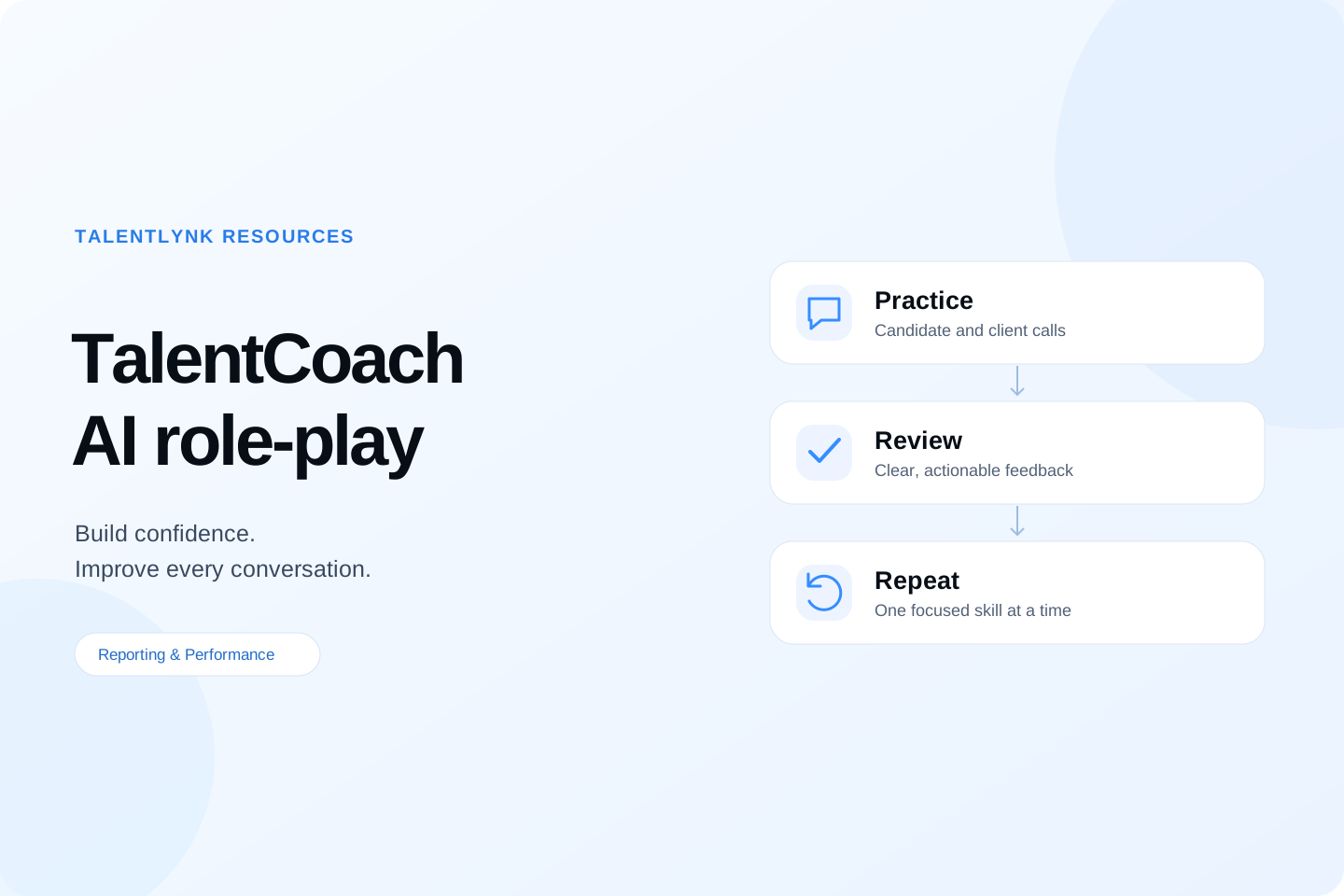
TalentCoach is AI recruitment role-play training inside TalentLynk. Recruiters practice speaking with realistic AI candidates and clients, then get structured feedback on their conversation. It gives your team a place to build confidence before the next screening call, client pitch or difficult objection.
Choose a scenario, have the conversation and review what to try next. Managers can shape the practice around their agency’s market, people and standards.
What can recruiters practice with TalentCoach?
Recruitment calls rarely follow a perfect script. A candidate has reservations. A hiring manager challenges your value. A promising conversation needs a clearer next step. TalentCoach helps consultants rehearse those moments out loud.
- Candidate calls: screening, job pitches, interview preparation, offers, counter-offers and keeping a candidate engaged.
- Client calls: business development, job briefings, candidate presentations, interview feedback and commercial negotiations.
- Tricky conversations: work on objections, guarded answers, time pressure and securing a useful next step.
Start with a supportive conversation or raise the challenge as confidence grows. Different personas bring different personalities and levels of pushback, so consultants can practice adapting their approach.
How AI recruitment role-play works
1. Choose the conversation you want to improve
Select a candidate or client scenario with a clear purpose. A new starter might work on an initial screening call. An experienced consultant might rehearse a terms negotiation or a demanding client introduction.
Keep the focus specific: uncover motivation, clarify a brief, handle an objection or agree a follow-up. One clear goal makes the feedback easier to put into practice.
2. Have a realistic practice call
Speak to an AI persona that responds in character to the conversation. Ask follow-up questions, explain your value and work through the concerns that emerge. The transcript lets you revisit the wording afterwards.
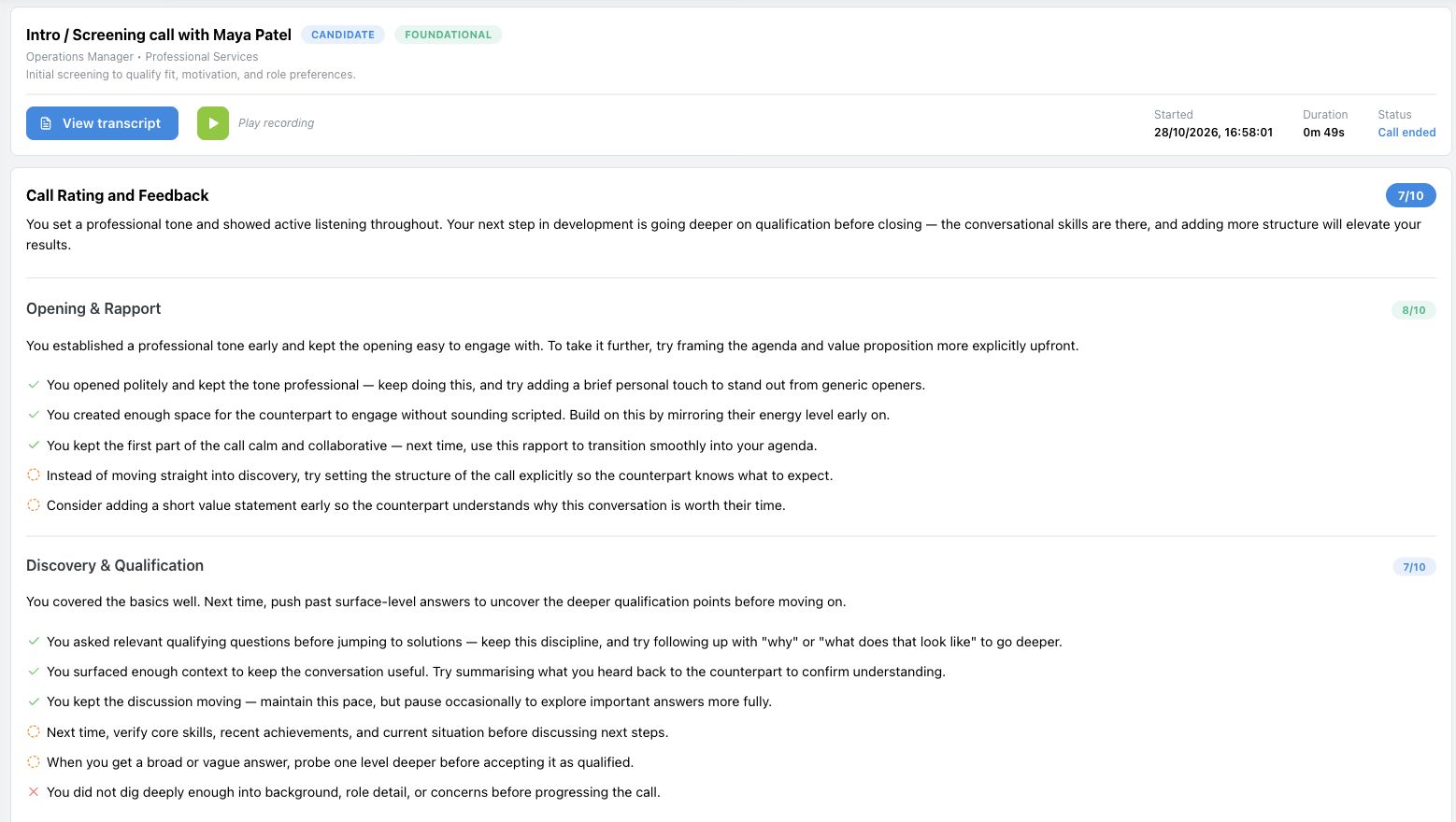
The screenshots in this article use a fictional practice conversation in the TalentLynk demo account.
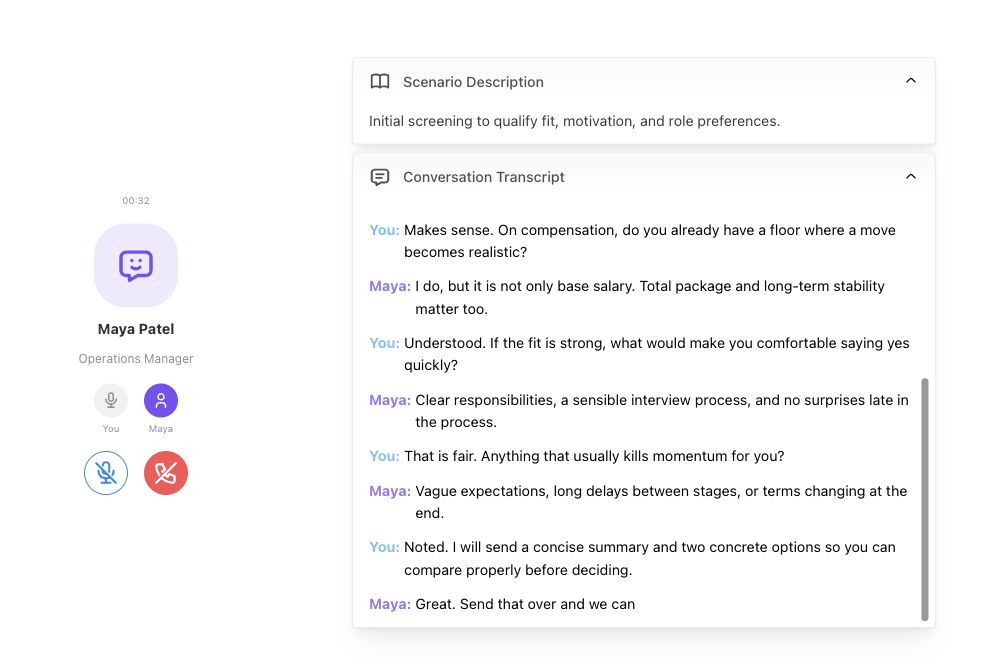
3. Turn feedback into a better next attempt
After the call, TalentCoach provides an overall rating, feedback across five conversation skills, scenario outcomes and practical next actions. Recruiters can see what worked and where a different approach could help.
- Opening & Rapport: set the tone and give the conversation a clear purpose.
- Discovery & Qualification: ask useful questions and explore the answers.
- Relevance & Credibility: make your value specific to the person you are speaking with.
- Objection Handling: understand concerns and respond clearly.
- Close & Next Steps: finish with a practical action and shared expectations.
The scenario outcomes add context to the scores: which goals were achieved, which were partly covered and what needs another attempt. Use the transcript alongside the feedback to understand the moment behind each suggestion.
Make the practice fit your recruitment agency
Your market, candidate profiles and client conversations are specific to your agency. TalentCoach lets managers create and edit scenarios and personas to reflect them.
- Set the context: choose the industry, situation, role and conversation type.
- Define success: add goals, concerns and requirements for the scenario.
- Shape the persona: tailor personality, behaviour, voice and accent.
- Adjust the challenge: tune how much information is shared, the strength of objections, resistance, demand for evidence, unpredictability and time pressure.
This gives a new recruiter a manageable starting point and an experienced consultant a more demanding rehearsal. Managers with the relevant access can review team practice calls and use the feedback to guide a focused coaching conversation.
A simple routine for recruiter coaching
You do not need a long training session to make practice useful. Try this repeatable routine for onboarding, team development or preparation for a specific call.
- Pick one skill. For example, asking a second question when a candidate gives a vague answer.
- Practice one relevant scenario. Keep the goal visible while letting the conversation develop naturally.
- Review the evidence. Read the feedback and revisit the relevant part of the transcript.
- Choose one change. Write down a question, explanation or closing phrase to try.
- Repeat and discuss. Practice again, then use the two attempts as a starting point for a manager check-in.
Use scores as a prompt for discussion alongside the conversation itself. The useful outcome is a clearer question, a stronger explanation or a better agreed next step.
Example: improve a candidate screening call
Suppose a consultant builds rapport but moves on before understanding why the candidate wants to leave. Their next practice goal could be to explore the reason behind a stated preference, then summarise what they heard before discussing a role.
Our candidate screening call notes template can help structure those questions. For client discovery practice, use the client job brief template to prepare the information a useful briefing should uncover.
Frequently asked questions
What is AI role-play for recruitment?
It is a practice conversation with an AI candidate or client. TalentCoach combines that rehearsal with a transcript and structured feedback, so recruiters can work on specific conversation skills.
Can we practice both candidate and client calls?
Yes. TalentCoach supports candidate and client scenarios, from screening and interview preparation to business development, job briefings and negotiation.
Can managers customise the training?
Yes. Managers can tailor scenarios, personas, goals and challenge levels to their agency. That makes it possible to practice the situations and objections their team wants to handle better.
What feedback does a recruiter receive?
Each completed practice call is reviewed with an overall rating, feedback on five core conversation skills, scenario outcomes and suggested next actions. The transcript helps the recruiter revisit the conversation in context.
How does TalentCoach fit into onboarding?
Give new starters a relevant scenario, review the feedback together and choose one skill for their next attempt. Repeat the exercise as they build confidence and move to more challenging conversations.
See TalentCoach in action
Bring a candidate or client conversation your team wants to improve. We will show how TalentCoach can turn it into focused practice, useful feedback and a practical coaching routine.
Explore the wider TalentLynk platform or browse more recruitment guides and templates.


